Shiwar News – Since the Beginning of Aban 1405 (23 October 2026)
A further increase in flour and bread prices, alongside reductions in government flour allocations to subsidised bakeries, has intensified financial pressure on low-income families in Balochistan since the beginning of Aban 1405. Many families in the region were already struggling to meet their most basic needs.
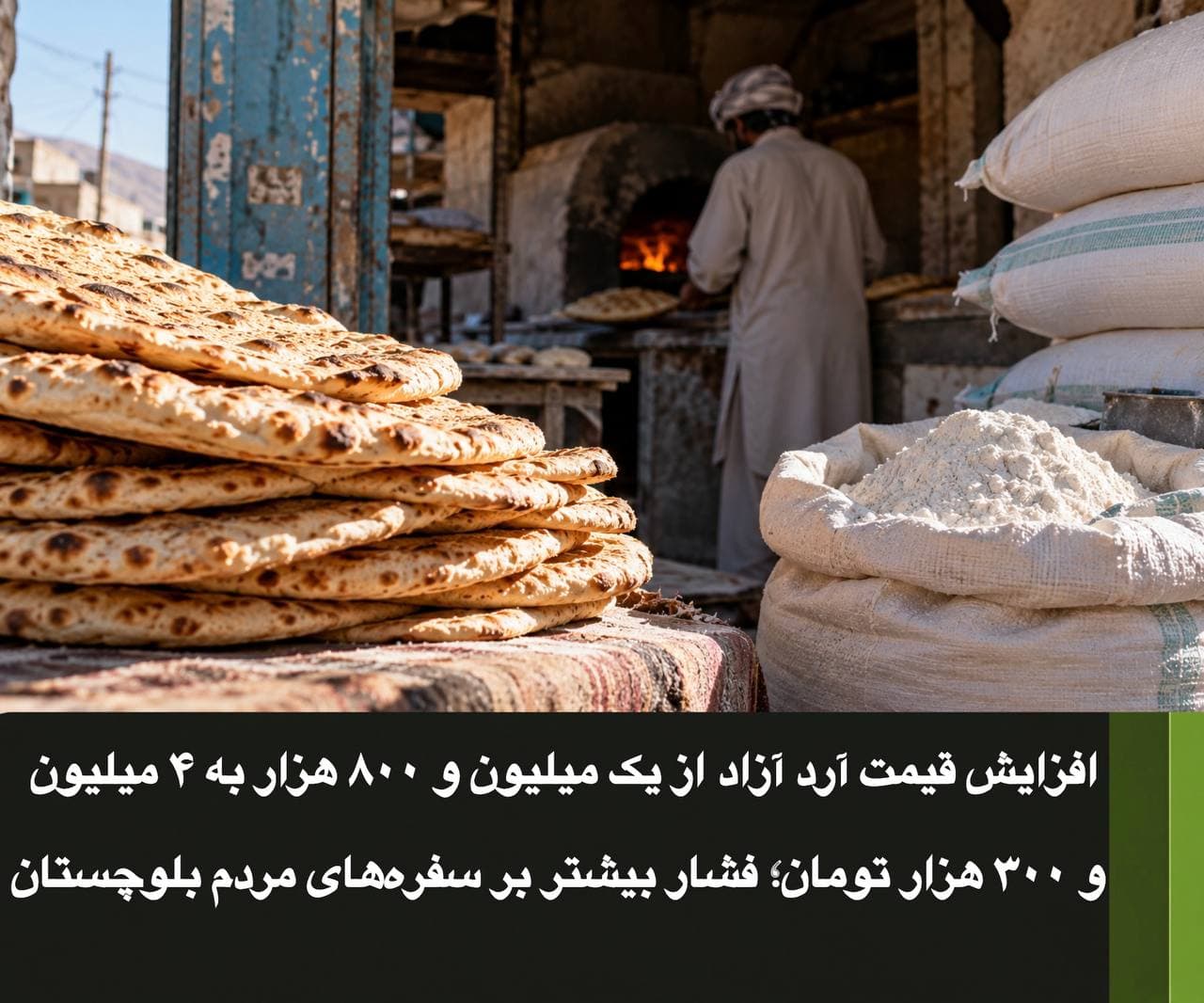
According to reports received by Shiwar News, the price of a sack of free-market flour has risen from 1.8 million to 4.3 million tomans, an increase of approximately 139%, sharply raising the cost of bread production.
This price increase comes at a time when bread is the main daily food staple for many disadvantaged families in Balochistan.
Even before the latest increase, some people living in poverty would wait outside bakeries, hoping that someone might buy them a loaf of bread.
The question now is how families who could not afford enough bread even before the price increase are expected to cope with another rise in costs.
Rising bread prices place an additional burden on people without identity documents.
According to local sources, many of these individuals do not have bank cards and are therefore unable to purchase bread from government-subsidised bakeries. Instead, they are forced to buy bread with cash from non-subsidised bakeries at higher prices.
This situation demonstrates how the lack of identity documents can affect access to even the most basic food necessities.
It raises a fundamental question: why is the subsidised bread distribution system implemented in a way that effectively excludes some of the most disadvantaged people from accessing it?
At the same time, bakers have reported reductions in government-subsidised flour allocations and a deterioration in the quality of the flour supplied to them.
Officials have announced that the bran content of flour has increased from 18% to 23%. However, bakers say that changing the flour composition without adjusting dough preparation and baking methods has resulted in undercooked and poor-quality bread in many bakeries.
In Balochistan, where poverty, unemployment and structural deprivation affect the lives of many residents, rising bread prices are not merely an economic issue. They are directly connected to food security, human dignity and the right to adequate food.
Under Article 11 of the International Covenant on Economic, Social and Cultural Rights, governments are required to take effective measures towards realising the right to adequate food and freedom from hunger.
A government responsible for guaranteeing the fundamental rights of its citizens cannot remain indifferent to circumstances in which families struggle even to buy their daily bread.
The issue is not simply that bread has become more expensive. The deeper concern is that poverty and discrimination in Balochistan have reached a point where buying even a single loaf of bread has become a daily challenge for some people.
Rising prices, reduced flour allocations and the exclusion of people without identity documents from subsidised bread raise serious questions about the effectiveness of social protection policies and the responsibilities of government institutions. The costs of these policy failures are borne most heavily by the poorest and most disadvantaged families.