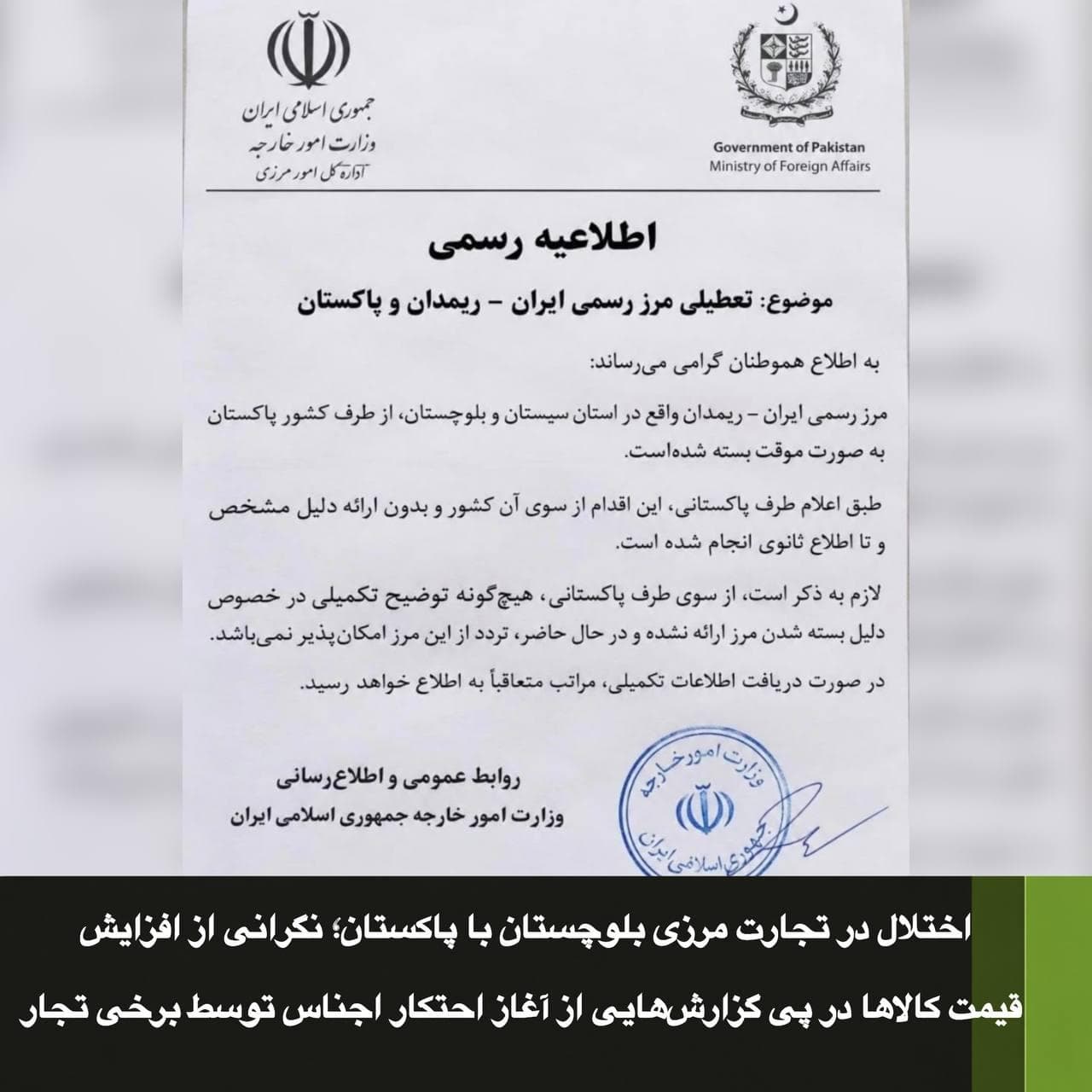
Shiwar News – Saturday, 17 October 2026: Following growing difficulties caused by US banking sanctions against Iran, trade activities along Balochistan's shared border with Pakistan have faced serious disruption, and exports from Iran to Pakistan have been temporarily suspended.
Against the background of economic crisis, widespread poverty and unemployment in Balochistan, this situation has increased concerns about rising prices of essential goods, falling incomes among border communities and the loss of employment opportunities.
Peyman Sanandaji, head of the Transport Commission of the Tehran Chamber of Commerce, told Iranian media that the border crossings between Iran and Pakistan had not officially been closed. However, he confirmed that Iranian exports to Pakistan had been temporarily suspended because of banking problems linked to sanctions.
According to Sanandaji, Pakistani importers are required to submit an electronic import form through Pakistan's banking system when importing goods from Iran. This process has faced serious difficulties because Iranian banks are under sanctions, effectively disrupting exports.
At the same time, reports have emerged of trade activities being suspended at the Rimdan and Taftan border crossings. Traders and drivers have reportedly been advised not to travel to these crossings until the situation becomes clearer.
However, what receives less attention in discussions about these trade restrictions is their direct impact on the lives of thousands of Baloch residents whose livelihoods depend on cross-border trade, goods transportation, local markets and other activities connected to these border crossings.
Balochistan has faced structural poverty, widespread unemployment, limited job opportunities and weak economic infrastructure for many years.
Under these conditions, border trade is not simply an additional economic activity for many families. It is one of the few available ways to meet their living expenses.
Any suspension or restriction of these activities can directly affect the incomes of drivers, workers, porters, shopkeepers and families who depend on the border economy.
There have also been reports that some traders are refusing to release goods already stored in warehouses because of uncertainty about the future of cross-border trade.
If this practice continues or becomes more widespread, it could reduce the supply of goods, increase prices and place further economic pressure on local residents.
Many Baloch families are already struggling to meet their most basic needs. Any further increase in the prices of essential goods, combined with fewer opportunities to earn an income, could deepen the existing economic hardship.
The central question is what plans the authorities have to prevent the economic consequences of this disruption.
Have any measures been introduced to support drivers, workers, shopkeepers and families whose incomes depend on border activities?
And what monitoring is in place over markets and warehouses to prevent uncertainty at the border from becoming an opportunity for hoarding goods and increasing prices?